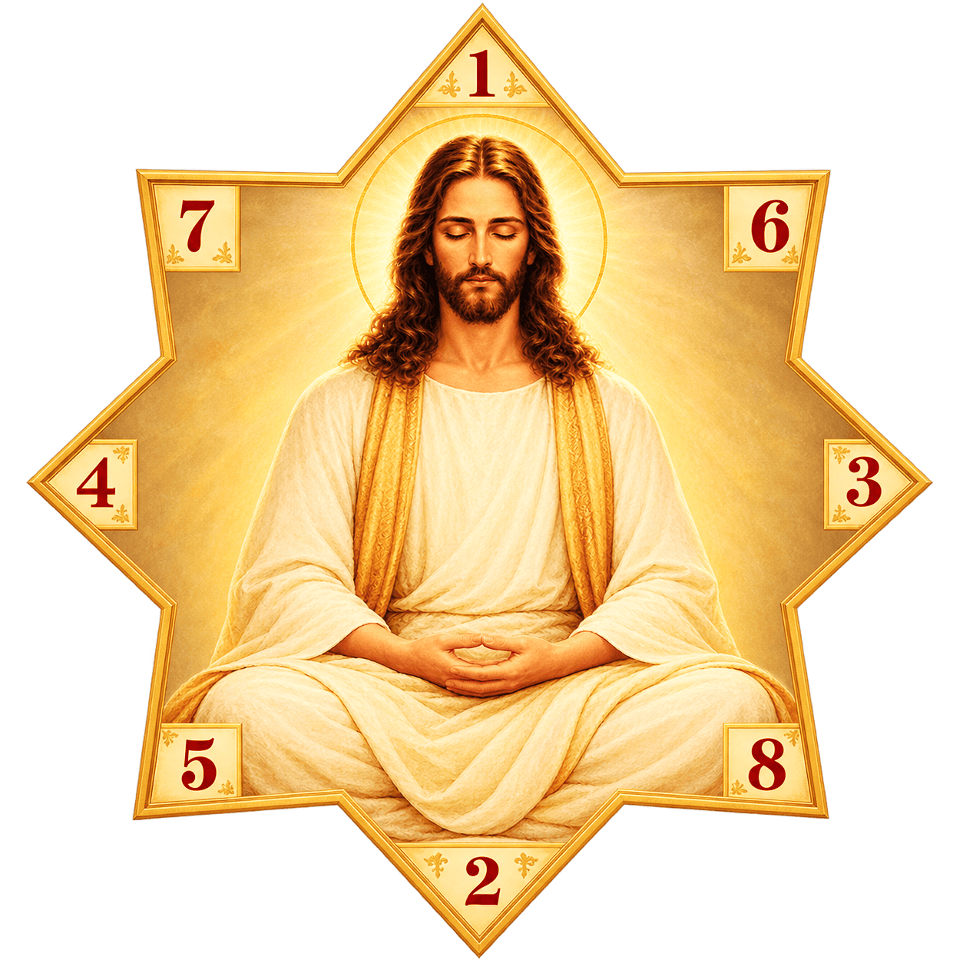
PELE YO’ETZ · EL GIBOR · ABI ‘AD · SAR SHALOM
Wonderful Counselor · Mighty God · Everlasting Father · Prince of Peace
Author: Maru 810
Introduction: Four Messianic Titles
These four titles are contemplated as one movement of faith directed toward the mystery of Jesus Christ: wisdom that guides, God’s saving might, the eternity of divine love, and peace that restores humanity’s relationship with God and neighbor. Ontological reflection asks not only what these titles mean, but how they illuminate human existence and the way we live.
1. Pele Yo’etz — Wonderful Counselor
Pele Yo’etz invites us to contemplate divine wisdom that surpasses human calculation. In Christian faith, this wisdom reaches its fullness in Jesus Christ, the Word of God made flesh. Human beings do not create truth from themselves; they are called to receive, seek, and embody truth with humility.
2. El Gibor — Mighty God
El Gibor proclaims God’s might. Divine power is not mere domination: it liberates, sustains life, establishes justice, and saves. In Christ, God’s strength is also revealed through humility, service, and self-giving love. Human beings discover true strength when they cease making themselves the center of everything and open themselves to God and responsibility for others.
3. Abi ‘Ad — Everlasting Father
Abi ‘Ad directs contemplation toward the eternal and faithful God. Eternity is not simply endless time; it is the fullness of life and love that is not conquered by transience. In Jesus Christ, the eternal Word enters human history. Human time gains depth when lived in relationship with God through fidelity, hope, and love.
4. Sar Shalom — Prince of Peace
Sar Shalom points to peace rooted in God and brought to fullness in Jesus Christ. Peace is more than the absence of conflict; it means restored relationships, justice, reconciliation, and inner wholeness. Christ’s peace does not erase the reality of the Cross. It leads people through suffering without surrendering to hatred and opens a path toward forgiveness and new life.
5. Mary’s Role in the Messianic Mystery
Mary and Pele Yo’etz
Mary receives the Word in faith and freedom: “Behold, I am the servant of the Lord; let it be to me according to your word” (Luke 1:38). She treasures and ponders these things in her heart (Luke 2:19). Mary is not the source of divine Wisdom; she is the servant of God who receives and serves the Word, becoming a model for those who listen to and live Christ’s wisdom.
Mary and El Gibor
In the Magnificat, Mary praises God: “My soul magnifies the Lord, and my spirit rejoices in God my Savior” (Luke 1:46–47). She confesses God as the source of salvation and power. At Cana, she tells the servants, “Do whatever he tells you” (John 2:5). Mary’s example directs people to Jesus and God’s work, not to herself as the source of power.
Mary and Abi ‘Ad
Mary is the Mother of Jesus Christ, the Word of God made flesh (John 1:1–14; Luke 1:31–35). Through her womb, the Son enters human history. Mary is not the source of Christ’s divinity and does not replace God the Father; she receives the unique calling to be the Mother of Jesus according to his humanity. In her, maternal love becomes a sign of fidelity, care, and self-gift.
Mary and Sar Shalom
Mary gives birth to Jesus, the Prince of Peace, but salvation and reconciliation have their source in God through Christ. At the foot of the Cross, Mary remains faithful (John 19:25–27); with the disciples, she also perseveres in prayer (Acts 1:14). She does not replace Christ’s redemptive work; she is a model of discipleship that continues to believe amid suffering and hope in God’s action.
Conclusion: Per Mariam ad Iesum
Per Mariam ad Iesum — through Mary to Jesus. In contemplating Pele Yo’etz, El Gibor, Abi ‘Ad, and Sar Shalom, Mary is not the center of divinity but the handmaid of the Lord, the Mother of Christ, and a model of faith who directs humanity to the Word. She receives Wisdom, glorifies God’s might, serves the mystery of the Incarnation, and remains faithful on the path toward peace. Everything reaches its culmination in Jesus Christ, the Word made flesh.
Pele Yo’etz · El Gibor · Abi ‘Ad · Sar Shalom
Wonderful Counselor · Mighty God · Everlasting Father · Prince of Peace
Note: This ontological reflection is a theological-contemplative meditation within the Catholic faith, not a new dogmatic formulation.

