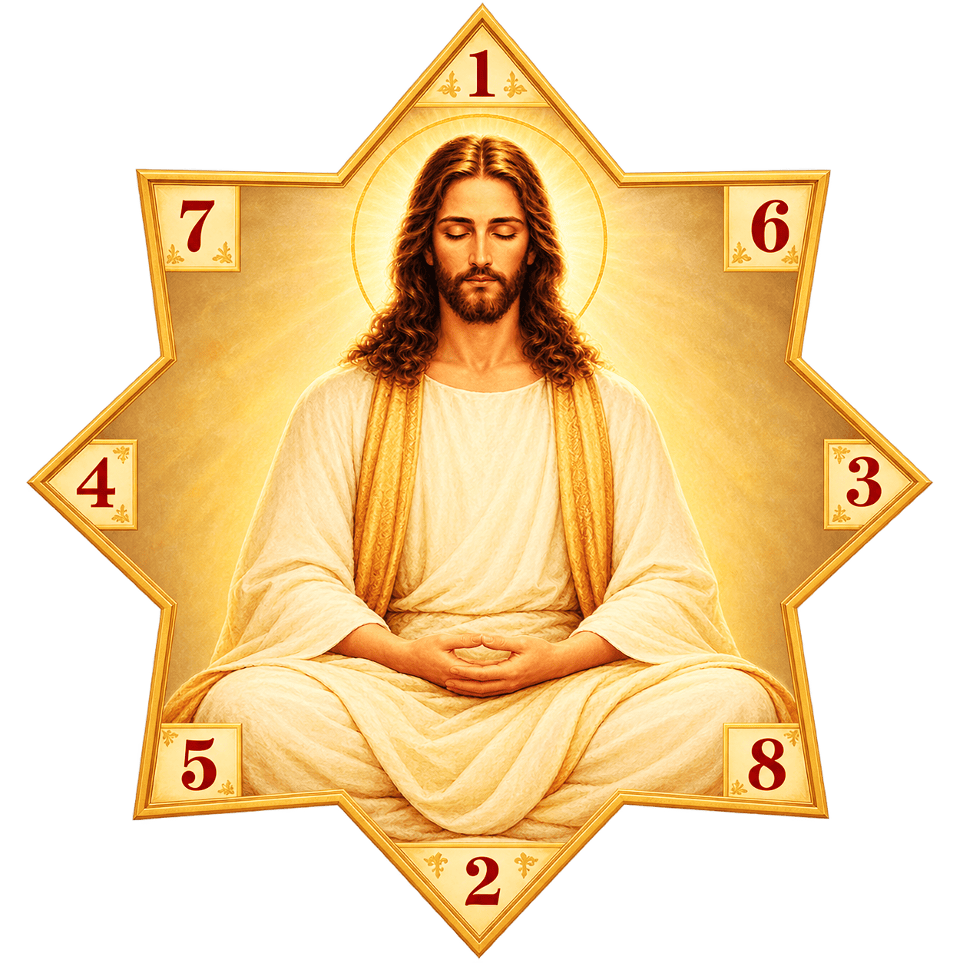
DOMINUS MEUS ET DEUS MEUS
By Living Water Maru 810
“My Lord and My God” — John 20:28
The confession of the Apostle Thomas was not born from a theory. It was born from an encounter.
Thomas had wanted certainty. He wanted to see and touch. But when the risen Jesus appeared in the midst of the disciples, his doubt was transformed into a deeply personal confession of faith: “Dominus meus et Deus meus!” — “My Lord and my God!”
Thomas does not simply say that Jesus is Lord. He does not merely acknowledge that Jesus is God. He says: “My Lord. My God.” Faith becomes a personal relationship between the human person and Christ.
In the thought of Søren Kierkegaard, faith is not merely a finished intellectual conclusion. It is an existential response before God. Thomas stands before the risen Christ and must answer personally. He is no longer merely thinking about Jesus; he is standing before Jesus Himself. And from that encounter comes the confession: “My Lord.”
Gabriel Marcel helps us understand the depth of the word my. Our relationship with God is not a relationship with an object that we can possess or completely explain. God is a Mystery encountered through presence, fidelity, and openness. Thomas does not possess God as an object. Rather, in confessing Christ, he entrusts himself to the One who is present before him.
For Karl Rahner, the human person is, at the deepest level of existence, open toward the Mystery of God. In the risen Christ, that Mystery becomes present in the person of Jesus. Thomas’s confession therefore becomes the human response to the God who first comes near to humanity.
For this reason, “Dominus meus et Deus meus” is not merely the statement of Thomas two thousand years ago. It can become the prayer of every person who dares to journey from doubt toward faith.
Faith does not always begin with certainty. Sometimes it begins with wounds, doubt, searching, and silence. But when Christ becomes present, the human heart is invited to open its eyes and say: “Dominus meus et Deus meus. My Lord and my God.”
Not merely, God exists, but God is present. Not merely, Jesus lives, but Jesus is my Lord.
Here, searching becomes encounter, doubt becomes faith, and knowledge becomes worship.

